
Douglasville has grown into one of the more popular communities for people who work in Atlanta but want a bit more space and a lower cost of living than the city itself offers. That trade off means a daily commute along I 20 that can stretch anywhere from thirty minutes on a good day to well over an hour once traffic backs up closer to the city. This particular kind of commute, a steady highway stretch followed by dense urban congestion, puts a specific combination of wear on a vehicle that is worth understanding if you want to avoid unexpected repairs down the road.
Why This Commute Wears A Car Differently Than Either Extreme Alone
A commute that is purely highway miles tends to be relatively gentle on a vehicle, since steady speeds and consistent conditions put less stress on brakes and transmissions than constant stopping and starting does. A commute that is entirely stop and go city traffic wears down brakes and transmissions considerably faster, but does not necessarily rack up the same overall mileage. The Douglasville to Atlanta commute combines both of these patterns in a single daily drive, covering a meaningful highway distance along I 20 before transitioning into the kind of dense, unpredictable traffic that Atlanta is well known for, particularly once you approach the Downtown Connector or navigate toward the Perimeter.
This combination means Douglasville commuters accumulate wear from two different sources simultaneously. The highway portion adds up in overall mileage, pushing components like tires and belts toward their replacement intervals faster than a driver covering fewer total miles would experience. The Atlanta traffic portion adds concentrated brake and transmission wear that a purely highway commute would never generate, regardless of total distance covered.
What Tends To Wear Out Faster On This Specific Commute
Brake pads take a disproportionate hit given how much of this commute involves stop and go conditions once you reach the city. Every stop generates heat and friction wear, and a commute that includes a significant stretch of Atlanta traffic layered onto an already substantial highway distance means Douglasville commuters often need brake service more frequently than the overall mileage on their odometer might suggest.
Transmission fluid also breaks down faster under this kind of combined driving pattern, since the transmission has to handle both the steady cruising of the highway portion and the constant shifting demanded by stop and go traffic during the Atlanta portion of the drive. Tires face accelerated wear from the sheer mileage involved in a daily I 20 commute, meaning tread depth should be checked more often than the standard interval would suggest for a driver covering less daily distance.
Signs Worth Watching For On This Kind Of Commute
A few signs suggest your vehicle may be feeling the effects of this particular commute pattern sooner than expected. Brake pads that feel thinner than expected during a routine check, a transmission that hesitates or shifts roughly, tires showing wear ahead of their expected mileage interval, or a car that seems to run warmer than usual after a long stretch of Atlanta traffic are all worth having checked. If you have dealt with a starting issue that seemed to develop after a particularly long or difficult commute day, our guide on the top 10 reasons your car won’t start and how to get back on the road covers a range of causes worth ruling out alongside these other wear patterns.
Engine oil condition deserves a mention here too, since the combined driving pattern of this commute technically qualifies as severe service under most manufacturer guidelines. A commute with a substantial stretch of stop and go traffic mixed into an otherwise steady highway drive prevents oil from maintaining consistent operating temperature the way a purely highway commute would, which means Douglasville drivers who spend real time in Atlanta traffic each day may want to shift toward the severe service oil change interval rather than the standard one, even though a large portion of their drive technically happens on the open highway.
Adjusting Your Maintenance Schedule For This Reality
Standard maintenance intervals are generally built around a fairly average mix of driving conditions, which does not fully capture the combined highway and stop and go pattern that defines a Douglasville to Atlanta commute. Rather than waiting for the mileage marker printed in your owner’s manual, it makes sense to think about both mileage and traffic exposure together when deciding how often to check brakes, transmission fluid, and tire condition.
Checking brakes every six months rather than annually is a reasonable adjustment for anyone regularly navigating Atlanta traffic as part of their commute, while tire rotation and tread checks on a slightly accelerated schedule help account for the substantial highway mileage this route adds up over the course of a year.
It also helps to think about which part of the drive tends to happen at which time of day, since traffic patterns on I 20 and the surrounding Atlanta connectors shift noticeably between a morning commute and an evening return trip. A driver who leaves early enough to beat the worst of the morning backup but comes home during peak afternoon congestion is effectively getting two very different driving experiences within the same daily round trip, and it is worth mentioning both halves of that pattern to a technician so any inspection accounts for the full picture rather than just an average.
Why A Mobile Mechanic Fits This Commute Pattern Well
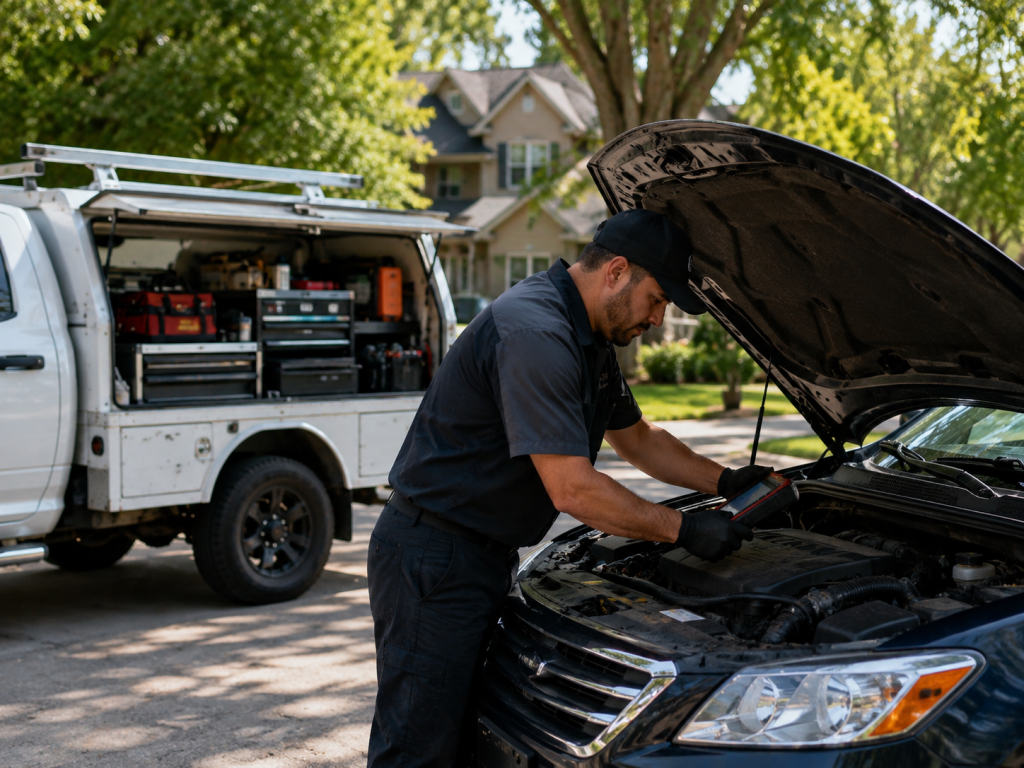
Given how much time is already spent commuting between Douglasville and Atlanta, adding a separate trip to a repair shop on top of an already long day is not appealing. A mobile mechanic can come to your home in Douglasville and handle brake inspections, transmission fluid checks, and tire assessments without requiring you to burn additional time navigating the same roads that created the extra wear in the first place.
We covered the broader advantages of this approach in our article on why mobile mechanics are better than traditional auto shops in Douglasville, which explains how convenience and flexible scheduling come together, particularly valuable for commuters trying to fit vehicle maintenance around an already demanding daily drive.
Stay Ahead Of What Your Commute Is Doing To Your Car
The Douglasville to Atlanta commute is not going to get any shorter, and the combined wear pattern it creates is not something a standard maintenance calendar fully accounts for. Paying closer attention to brake condition, transmission performance, and tire wear, rather than relying solely on the mileage markers in your owner’s manual, is one of the most effective ways to keep your car reliable despite the demands of this particular route. A little extra vigilance here pays off considerably more than it would for a driver whose daily commute involves just one type of driving rather than this specific combination of highway distance and city congestion.
If it has been a while since your vehicle had a proper inspection, visit our homepage to learn more about our services, or reach out through our contact us page to schedule a visit at your home or office at a time that fits your schedule.
A little extra attention now can help your car keep pace with everything the Douglasville to Atlanta commute quietly asks of it every single day.