
Ask ten drivers what a tune up is and you may get ten different answers. Some picture a quick oil change, others imagine a full engine overhaul, and plenty of people simply know it is something their car is supposed to get now and then. The truth sits in the middle, and it has changed over the years as cars have become more advanced. This Q&A explains what a tune up covers, what a tune up checklist looks like today, how often you need one, and how a mobile mechanic in Douglasville can handle it without a trip to the shop.
What Is a Tune Up?
A tune up is a round of preventive maintenance meant to keep your engine running smoothly, efficiently, and reliably. The goal is to inspect, test, and replace the parts that wear out over time, before they cause poor performance or a breakdown. Think of it as a checkup for your car, with replacement of any worn items that are due.
Is a Tune Up the Same as It Used to Be?
No. Older cars with carburetors and distributor ignition systems needed frequent adjustments to keep them running well, and that is where the term “tune up” came from. Modern vehicles use computer controlled fuel injection and electronic ignition, so many of those hands on adjustments are no longer needed. Today a tune up usually means replacing wear items such as spark plugs and filters, inspecting key systems, and checking the engine computer for stored trouble codes. Because there is no single standard, what is included can vary from shop to shop, so it helps to ask for a list of exactly what will be done.
What Is Included in a Typical Tune Up Checklist?
The exact list depends on your vehicle, its mileage, and its maintenance history. Your owner’s manual has the service schedule for your specific car. In general, a tune up may include some or all of the following items.
Spark Plugs
Spark plugs ignite the fuel and air mixture in each cylinder. Worn plugs can cause rough idling, hesitation, misfires, and poor fuel economy. Many modern plugs last a long time, but they do wear, and the right interval depends on the type of plug your engine uses.
Ignition Components
On many vehicles, spark plugs work with ignition coils and, on some older models, spark plug wires. A technician checks these parts for cracks, wear, or signs of failure, and replaces them if needed.
Air Filter
The engine air filter keeps dust and debris out of the engine. A clogged filter restricts airflow, which can reduce power and efficiency. It is a simple, inexpensive part that is easy to inspect and replace.
Cabin Air Filter
This filter cleans the air that flows into the passenger compartment through your vents. It is not an engine part, but it is often checked during service, because a dirty one can reduce airflow and leave odors in the car.
Fuel Filter and Fuel System
Some vehicles have a serviceable fuel filter, while others have it built into the fuel pump assembly. A technician may inspect the fuel system for leaks or restrictions and may recommend a cleaning service if symptoms point to it. Whether that is needed depends on your car and how it runs.
Engine Oil and Oil Filter
Fresh oil and a new filter are central to engine health. Many tune up packages include an oil change or a check of the oil level and condition.
PCV Valve
The positive crankcase ventilation valve helps manage pressure and vapors inside the engine. A stuck or clogged valve can cause oil leaks and rough running, so it is often inspected.
Belts and Hoses
Technicians look for cracks, fraying, glazing, and soft spots on the drive belts and the coolant hoses. A belt or hose that fails can leave you stranded, so replacing worn ones early is smart.
Battery and Charging System
The battery, terminals, and cables are checked for corrosion and weak connections, and the charging system is tested. A weak battery is a common cause of a car that will not start. Our guide to the top 10 reasons your car won’t start and how to get back on the road explains how to spot battery trouble and other common culprits.
Fluids
Coolant, brake fluid, power steering fluid, transmission fluid, and washer fluid are checked for level and condition and topped off or flagged for replacement as needed.
Tires, Brakes, Lights, and Wipers
Many tune up services include a general inspection of tire pressure and tread, brake pads and rotors, exterior lights, and wiper blades. These items are not part of the engine, but they affect safety and are easy to check while the technician is already looking over the car.
Computer Scan
A scan tool reads stored trouble codes and live data from the engine computer. This can reveal problems that have not yet triggered a warning light, and it helps point toward the cause of any symptoms you have noticed.
How Do I Know If My Car Needs a Tune Up?
Your car often tells you. Watch for these signs:
- Rough idling or shaking when stopped
- Hesitation or sluggish acceleration
- Worse fuel economy than usual
- The check engine light coming on
- Hard starting or stalling
- Unusual noises or vibrations from the engine
- Dark or heavy exhaust smoke
- You are past the mileage listed in the owner’s manual for major service
None of these signs points to one single cause, which is why a proper inspection and a scan for codes are better than guessing. A technician can narrow it down and tell you which parts actually need attention.
How Often Do I Need a Tune Up?
There is no one answer. Older cars sometimes called for a tune up every year or every 12,000 miles, but modern vehicles can go much longer between major services. Many spark plugs and other components are designed to last many thousands of miles. The best guide is the maintenance schedule in your owner’s manual, which lists what to replace and when. Driving conditions matter too. Stop and go traffic, short trips, towing, dusty roads, and extreme heat or cold usually call for more frequent attention than the minimum schedule suggests.
Does Driving in Douglasville Change the Answer?
It can. Georgia summers are hot and humid, which puts extra load on cooling systems, batteries, and air conditioning. Many Douglasville drivers also commute into Atlanta, which means a lot of time in heavy traffic, where the engine idles and the brakes get a workout. Daily stop and go driving counts as harder use under many manufacturers’ schedules. Our article on commuting into Atlanta and car care tips for Douglasville drivers explains how that kind of driving affects your car and what to keep up with.
Will a Tune Up Improve My Gas Mileage?
It can, if the car has a problem that is hurting efficiency. Worn spark plugs, a clogged air filter, or a failing sensor can all reduce fuel economy, and fixing them can bring performance back toward normal. If your car is already in good shape, a tune up will not make it better than new, but it can help it stay that way. Results vary from car to car.
Can I Do Parts of a Tune Up Myself?
Some parts are friendly to DIY work. Many people can inspect and replace an engine air filter or a cabin air filter, check fluid levels, and look over belts and hoses for obvious wear. Other tasks, like replacing spark plugs on engines where they are hard to reach, working with ignition coils, or reading and interpreting trouble codes, can be more involved. Tightening plugs to the wrong torque or installing the wrong part can cause problems. If you are not sure, it is better to have a technician handle it.
Can a Mobile Mechanic Perform a Tune Up?
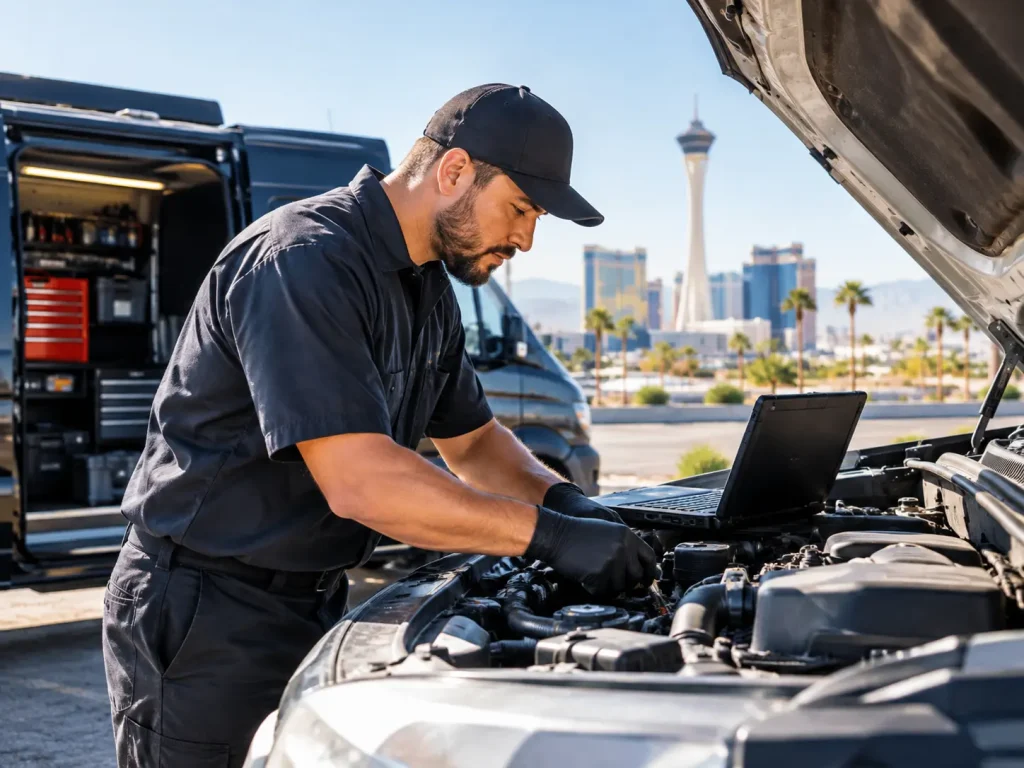
In many cases, yes. A mobile mechanic can come to your home or workplace in the Douglasville area, scan the car, inspect the items above, and replace common parts like spark plugs, filters, belts, and the battery on the spot. That saves you the time of dropping the car off and arranging a ride. Some jobs, such as certain major repairs, may need the equipment of a full shop, and a trustworthy technician will tell you honestly when that is the case. When you book, share your vehicle’s year, make, model, and mileage, along with any symptoms you have noticed, so the right parts can be ready.
What Should I Ask Before Agreeing to a Tune Up?
- Exactly which items will be inspected and which will be replaced
- Whether the service follows the schedule in your owner’s manual
- Whether you will get a written list of any additional recommendations
- What the replacement parts are and how long they are expected to last
- Whether any repairs can wait, and which ones are urgent
A good technician is happy to answer those questions and to explain which items are needed now and which can wait.
Keep Your Car Running Its Best
A tune up is really just good preventive care. Know what your owner’s manual recommends, pay attention to the early warning signs, and have your car inspected before small issues grow. A little attention now is almost always cheaper than a repair later.
To learn more about our services, visit our homepage. If you would like a tune up or an inspection, reach out through our contact us page and we will come to you anywhere in the Douglasville area.