
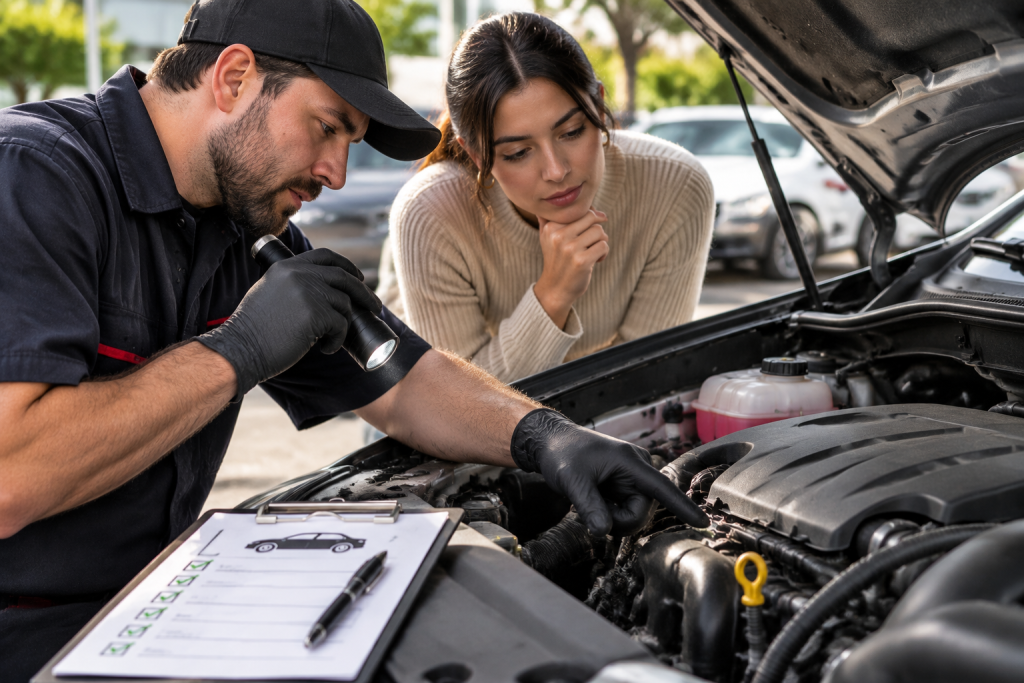
Buying a used car can be a smart way to get more vehicle for your money, but it also comes with a risk. You cannot see the car’s whole history, and the seller may not know every detail either. A clean shine and a smooth test drive can hide worn parts, hidden damage or deferred maintenance that shows up the week after you sign the paperwork. A used car inspection, often called a prepurchase inspection, is one of the best ways to reduce that risk. A trained technician looks the car over before you commit and tells you what they find. This guide explains what a mechanic checks, what you can look at yourself, the red flags to watch for and how an inspection helps you decide. If you are looking for a used car inspection in Douglasville, here is what to expect.
Why Get an Inspection Before You Buy
- It finds problems you cannot see. Many issues sit underneath the car, inside the engine or in the way parts wear, and a trained eye knows where to look.
- It helps you avoid unpleasant surprises. Knowing about a problem before you buy lets you plan for it, negotiate or walk away.
- It gives you a neutral opinion. A technician has no stake in the sale and works for you.
- It gives you a better sense of the car’s future needs. Even a good car may need maintenance soon, and an inspection helps you see what is coming.
- It supports a confident decision. Whether the report is clean or not, you know more than you did.
An inspection is not a guarantee. It is a snapshot of the car’s condition on the day it is checked, and it cannot predict every future problem. But it is a far better foundation for a decision than a quick look and a hopeful feeling.
What a Mechanic Typically Checks
The exact scope varies, but a thorough inspection often covers the following areas.
Exterior and body
- Panel gaps, paint color and texture that look uneven, which can suggest past repairs.
- Signs of accident damage or bent panels.
- Rust on the body, wheel wells, door bottoms and trunk area.
- Glass condition, including chips and cracks.
- Lights, lenses and trim.
Frame and underbody
- Signs of frame or structural damage or repair.
- Rust or corrosion on the frame, floor pans and suspension mounts.
- Leaks of oil, coolant, transmission fluid or other fluids.
- Condition of the exhaust system, including rust or loose parts.
- Damage from impacts or off road use.
Tires and wheels
- Tread depth and whether it is even across each tire.
- Uneven wear patterns, which can point to alignment or suspension problems.
- Matching tires, and signs of damage such as bulges or cracks.
- Wheel condition, including bends or cracks.
Under the hood
- Engine oil level and condition, and signs of leaks.
- Coolant level and condition, and the look of the cooling system.
- Transmission, brake and power steering fluids.
- Belts and hoses for cracks, wear and softness.
- The battery and its terminals, including corrosion.
- Signs of poor repairs or missing parts.
Starting and running
- How the engine starts, especially when it is cold. A cold start can reveal problems a warm engine hides.
- Idle quality, noises and vibration.
- Smoke from the exhaust.
- Warning lights that come on and go off as they should.
Test drive
- How the car accelerates and shifts.
- Steering feel and whether the car tracks straight.
- Braking performance, including noises, pulling and pedal feel.
- Suspension behavior over bumps.
- Unusual vibrations, clunks, whines or rattles.
Brakes and suspension
- Pad and rotor condition.
- Shocks, struts, bushings, ball joints and tie rods for wear.
- Signs of leaks or damage.
Electrical and interior
- Windows, locks, mirrors, wipers and horn.
- Heating and air conditioning performance.
- Infotainment, gauges and controls.
- Seat belts and safety equipment.
- Signs of water damage, such as damp carpet, a musty smell, rust on seat bolts or silt in unusual places.
- Wear on the pedals, steering wheel and seats that does not match the claimed mileage.
Computer scan
A technician can connect a scan tool to the diagnostic port to look for stored trouble codes and to see whether the car’s emissions monitors have completed their self checks. If codes were cleared recently, the monitors may show as not ready, which can be a clue that someone wanted to hide a problem. A scan is not a full diagnosis, but it often reveals useful information.
What You Can Check Yourself First
Before you pay for an inspection, you can screen out cars that are not worth the time.
- Look the car over in daylight, on a dry day if possible, since rain and darkness hide flaws.
- Ask for service records. A car with documented maintenance is usually a better bet than one with none.
- Check the vehicle history report. These reports can show reported accidents, title problems and ownership history, though they do not catch everything.
- Check the title and the VIN. Make sure the vehicle identification number on the car matches the paperwork, and ask about the title status.
- Look up recalls for the vehicle and ask whether open recalls have been handled.
- Test everything you can, from the windows to the air conditioning to the lights.
- Take a test drive on a mix of roads, including some highway driving, with the radio off so you can listen.
- Ask the seller questions. Why are they selling, how long have they owned the car, what has been repaired and are there any known problems?
Red Flags to Take Seriously
- The seller will not allow an independent inspection. A seller with nothing to hide generally does not mind.
- Pressure to decide quickly, or claims that other buyers are waiting.
- No service records, or records that do not add up.
- A title that is branded or unclear, or paperwork that does not match the car.
- Warning lights on, or a dashboard light that stays off when it should light up briefly.
- A fresh engine wash or heavy air freshener, which may be covering leaks or odors.
- Signs of flood damage, such as a musty smell, mud or silt in the trunk or under the seats or rust in odd places.
- Mismatched paint or panels that suggest repairs.
- A price that seems too good to be true.
Cars With Heavy Commuting History
High mileage from commuting is not automatically bad, since highway miles can be gentler than city driving. But the car’s use matters. Stop and go traffic, long daily distances and heavy use can all leave their mark on brakes, suspension, tires and the drivetrain. If you live in an area where many people commute into a big city, you will likely see plenty of cars with that history. Our post on commuting into Atlanta and car care tips for Douglasville drivers explains what that kind of driving does to a car, and it can help you read the wear on a used vehicle.
Plan for Maintenance After You Buy
Even a good used car often needs some work soon after you buy it. Fluids may be due, filters may need replacing and wear items may be near the end of their life. The inspection report can help you build a short list. Many owners treat the first service after a purchase as a reset, bringing the car up to date so they know where things stand. If you are curious about what that kind of service includes, read our guide on what is included in a tune up.
How to Use the Inspection Results
- If the report is clean, you can buy with more confidence, though no car is perfect.
- If minor issues turn up, you can ask the seller to fix them or to adjust the price, or you can plan for the work yourself.
- If major issues turn up, such as structural damage, serious leaks, transmission trouble or safety concerns, it may be best to walk away.
- Ask the technician to explain what is urgent, what can wait and what is just normal wear.
- Get the findings in writing so you can refer to them.
How a Mobile Mechanic Can Help
A mobile mechanic can meet you where the car is for sale, with the seller’s permission, and inspect it on the spot. That saves you from arranging transport to a shop and makes it easier to check several cars. They can look over the body, tires, fluids, belts, brakes and suspension, check the battery, scan for codes, take a test drive if the seller agrees and explain what they find. A complete inspection of the underside is easier on a lift, and deeper testing of the engine or transmission may need a shop with specialized equipment. A good technician will be honest about what can be checked where you are, and what their findings do and do not tell you. For your own safety, arrange to meet in a public place during the day and bring someone with you when you can.
Quick Used Car Inspection Checklist
- Get service records and a vehicle history report.
- Verify the VIN and title.
- Check for open recalls.
- Look at the body, frame, tires and underside.
- Check fluids, belts, hoses and the battery.
- Start the car cold and listen.
- Test drive and test every feature.
- Scan for codes.
- Look for signs of flood or accident damage.
- Get an independent inspection before you pay.
A little time and an independent inspection can save you from a big mistake and help you drive away with confidence. If you would like help before you buy, visit the Mobile Mechanic Pros of Douglasville homepage to learn more, or contact us to schedule an inspection.